There is a town in France where knives have been forged for nearly seven centuries. It sits in a fold of the Auvergne mountains, clinging to the gorges of a mountain torrent, and today it makes the vast majority of the country's blades. That town is Thiers.
It is called France's cutlery capital, and the title is no tourist slogan. You can read it in the geography, in the gestures handed down from father to son, and in a river that turned the grinding wheels long before electricity existed.
This is the story of that land of knives, and of the lineage of craftsmen to which every Résiliant piece belongs.
Seven centuries of knives along the Durolle
Thiers, in the Puy-de-Dôme, has forged knives since the Middle Ages, from the 13th century onward. By the 15th century a quarter of the town's workers already lived from the trade, and the cutlery town took its true shape in the late 16th century.
The earliest traces of cutlery in Thiers date back to the Middle Ages, to the 13th century. There is no precise founding date: the craft settled in gradually, carried by iron, water and the charcoal of the surrounding forests.
By the 15th century the activity was already vast: it is estimated that a quarter of the town's workers practised a knife-related trade. The cutlery town took its structured form in the late 16th century, with its guild rules and corporations.
As early as the 17th century, the knives of Thiers were exported far and wide: to Spain, Italy, Germany, Turkey and as far as the Indies. The little Auvergne town was already a name that travelled the trade routes.
The valley of the works: water, iron and men
Cutlery took root in Thiers thanks to the Durolle, a steep torrent whose force turned the grinding wheels and tilt hammers. Along its gorges rise the Valley of the Works and the Valley of the Grinders, the historic heart of the trade.
If Thiers became a cutlery town, it was first of all because of a river. The Durolle plunges through the gorges with a rare steepness, and for centuries that energy drove the grinders' wheels, the smiths' tilt hammers, the mills and the fulling works.
The workshops clung to the water, one above the other, in what is called the Valley of the Works, lower down, and the Valley of the Grinders, upstream. A « rouet » was the grinder's workshop with its water wheel. It is in the dark, roaring lower part that the famous Creux de l'Enfer (Hollow of Hell) site stands.
This dependence on the river only ended in the 20th century. Around 1920, the electrical power installed in the town finally surpassed that supplied by the Durolle. The torrent had done its work: it had built a capital.
The Yellow Bellies and the knife dog
The grinders of Thiers sharpened blades lying flat on their bellies above the wheel, a posture unique in the world. Sprays of sandstone grit and metal filings stained their bellies yellow, hence the nickname « Yellow Bellies ». Tradition holds that a dog would lie across their legs to keep them warm.
The hardest trade was the grinder's. To control the pressure of the blade on the stone, he worked lying on his belly, on a board stretched over the endlessly turning wheel, his whole weight resting on his forearms. Lying there for hours, he was showered with sandstone grit from the wheel and metal filings that stained his belly yellow: hence his nickname, the « Yellow Belly ».
The workshops were cold and wet, crossed by water, sandstone grit and coal dust. Thiers tradition holds that the grinder, motionless for hours, kept warm thanks to a dog lying across his legs and lower back: the famous « knife dog ». The tale belongs to the memory of the region more than to the archives, but it tells the truth about one thing: the harshness of the work.
The danger, on the other hand, is well documented. Wheels could shatter and kill a man, the damp wore down bodies, the sandstone dust ate at the lungs. Behind every beautiful old blade, there were lives like these.
Nearly 80% of France's knives
Thiers today produces close to 80% of the knives made in France. The area gathers around 70 to 80 companies, some 850 direct jobs and nearly 2,000 indirect ones, and has long made a large share of the knives known as « Laguiole ».
The past has not left the town: it still works there. The Thiers area today makes nearly 80% of the knives produced in France, and alone accounts for more than half of the jobs and revenue of the national cutlery-and-flatware sector.
Behind those figures lies a human reality: around 70 to 80 companies, some 850 direct jobs and nearly 2,000 indirect ones. The work is often still divided and handed down within families, with its smiths, its assemblers, its polishers and a swarm of subcontracting workshops, exactly as before.
It is also in Thiers that a large part of the Laguiole-type knives have long been made. Between 1950 and 1985, nearly all Laguiole knives came out of Thiers workshops. The name of a village, the know-how of a town.
« Le Thiers »: a knife, a label, a stamp
« Le Thiers® » is a collective trademark created in 1994 by a group of cutlers to give the town its own knife. Managed by the Confrérie du couteau Le Thiers®, it guarantees manufacture within the Thiers area and is recognised by its double-wave blade and the « T » stamp.
For a long time, Thiers made the world's knives without having one of its own. The confraternity founded in 1993 decided to change that: in 1994 it registered the collective trademark « Le Thiers® » and unveiled its reference knife.
The model has its own design: a slender, slightly curved line with a double wave. To bear the name, each piece must be made within the Thiers area, follow that registered design and carry on the blade the name of its maker along with the « T » stamp. The Confrérie ensures these rules are respected.
Make no mistake: « Le Thiers » is not an official designation of origin like a wine, but a private collective trademark with its own set of specifications. A way, for a town that made everything, to finally sign something of its own.
Forging in Thiers today
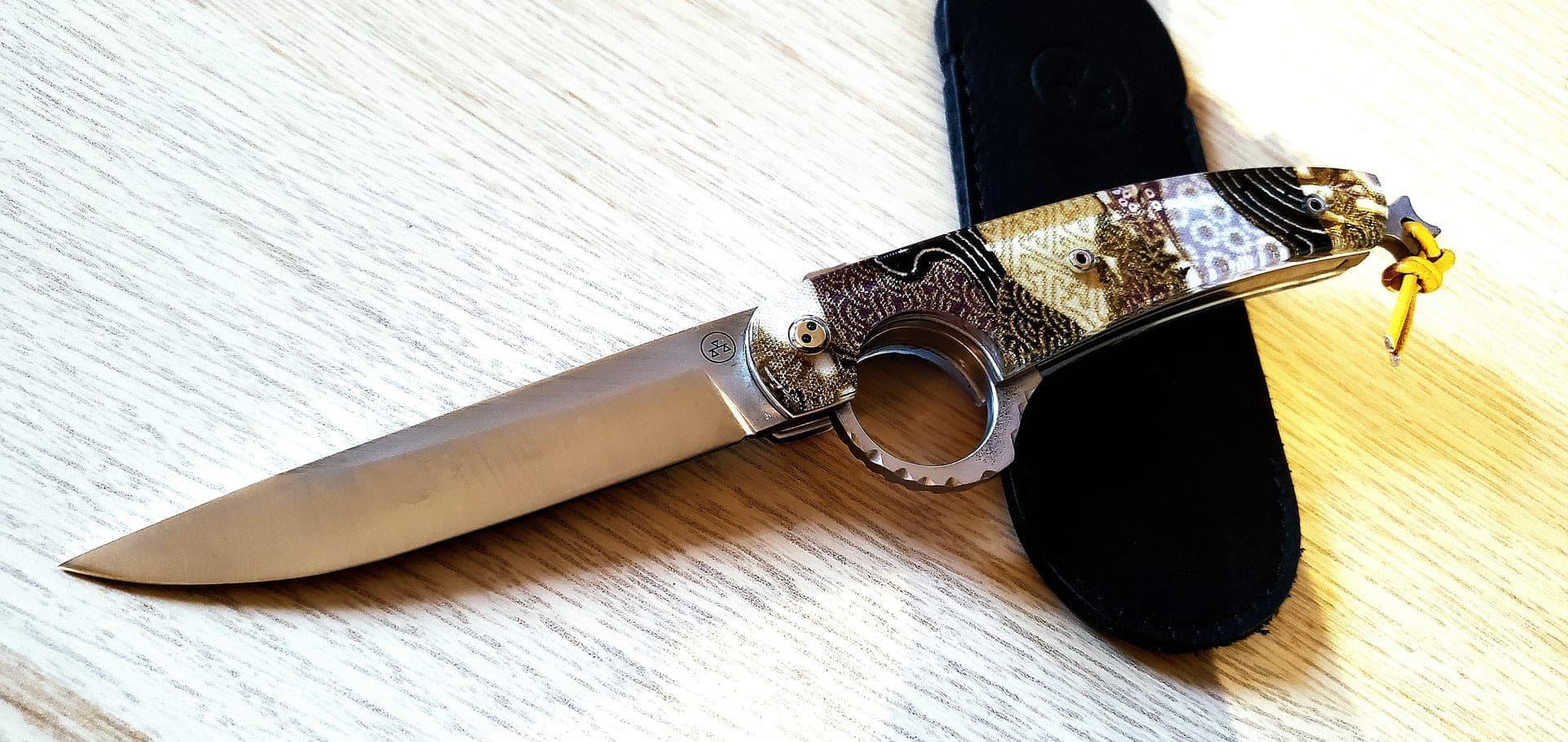
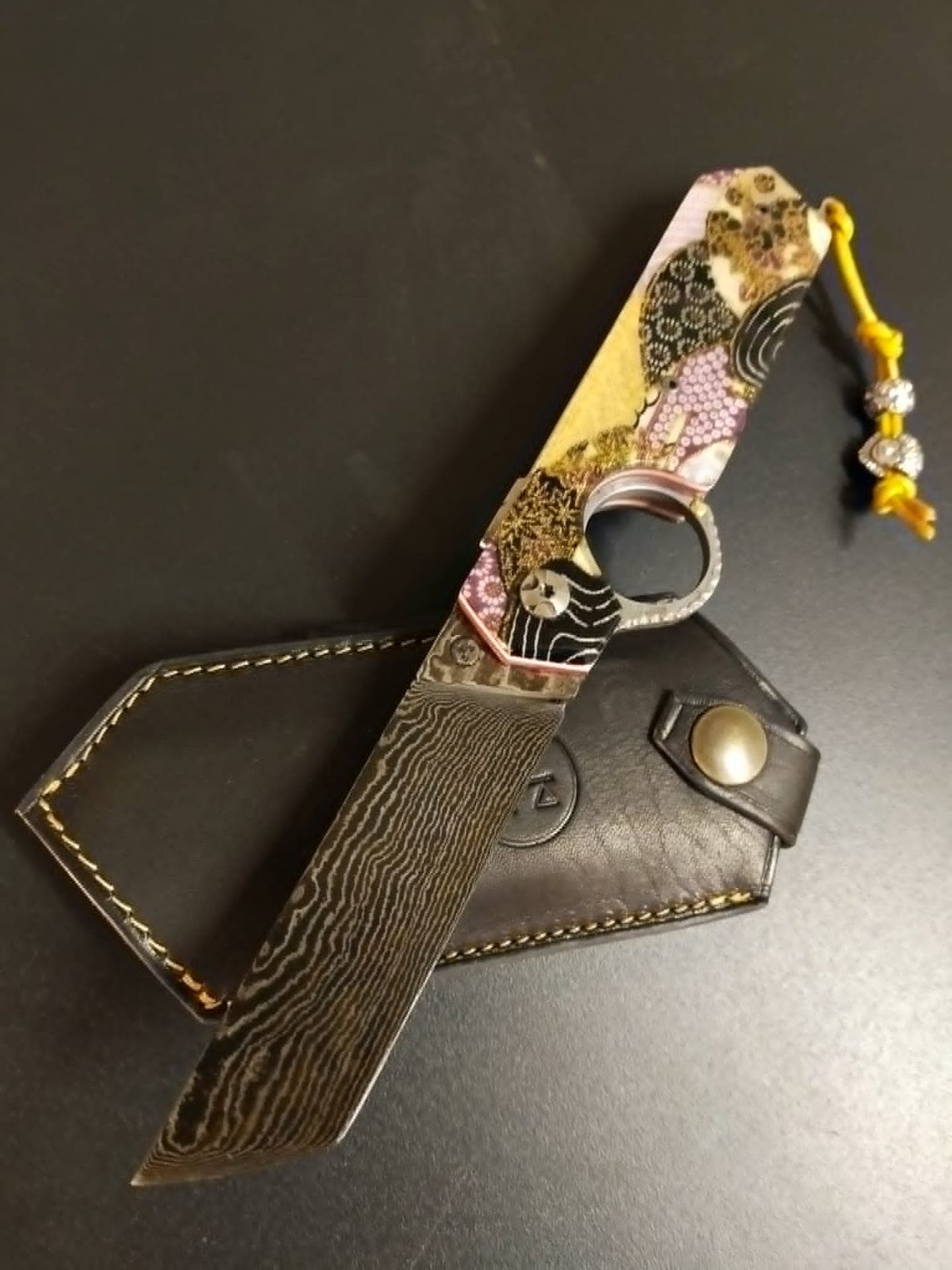
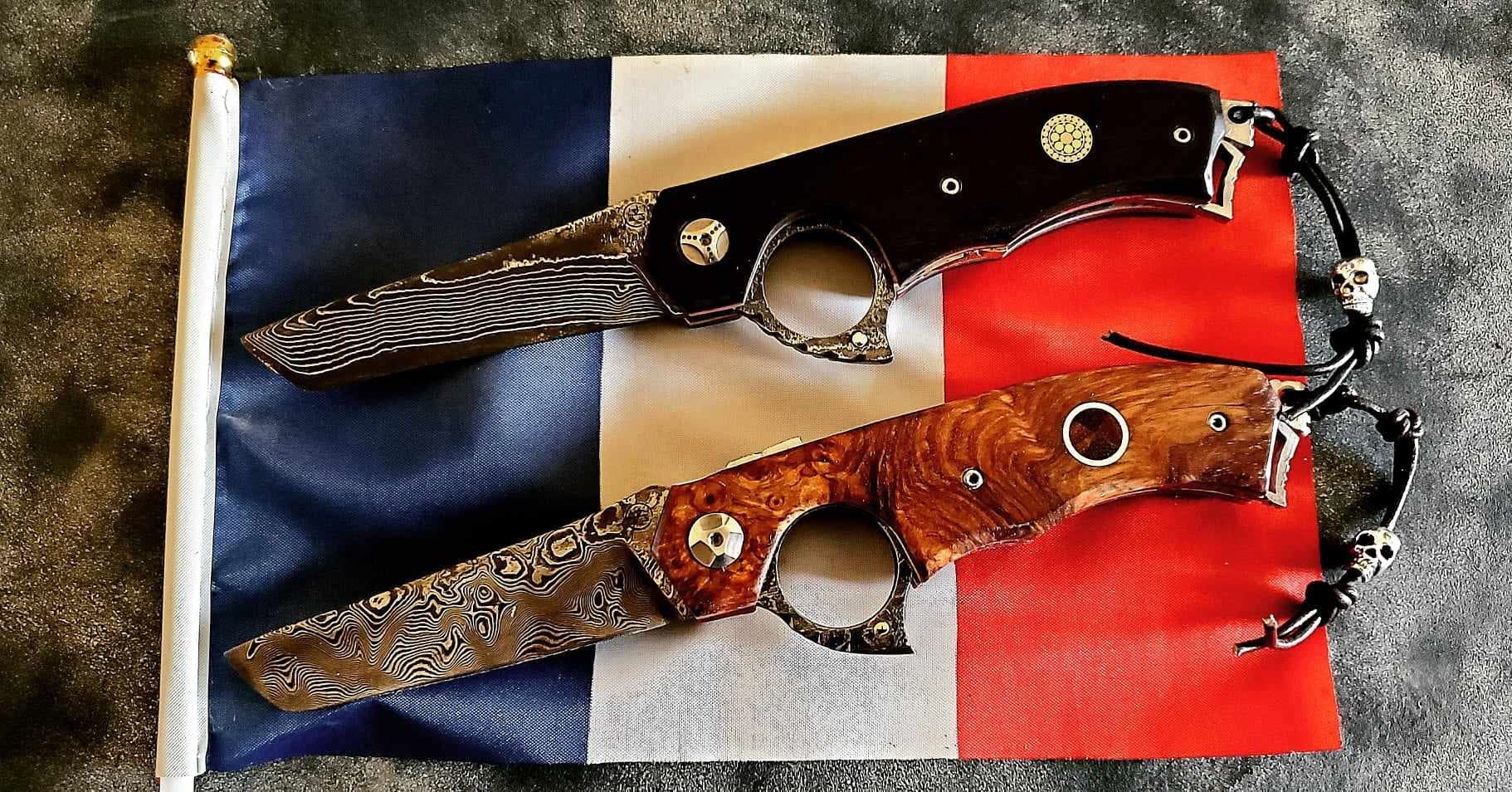
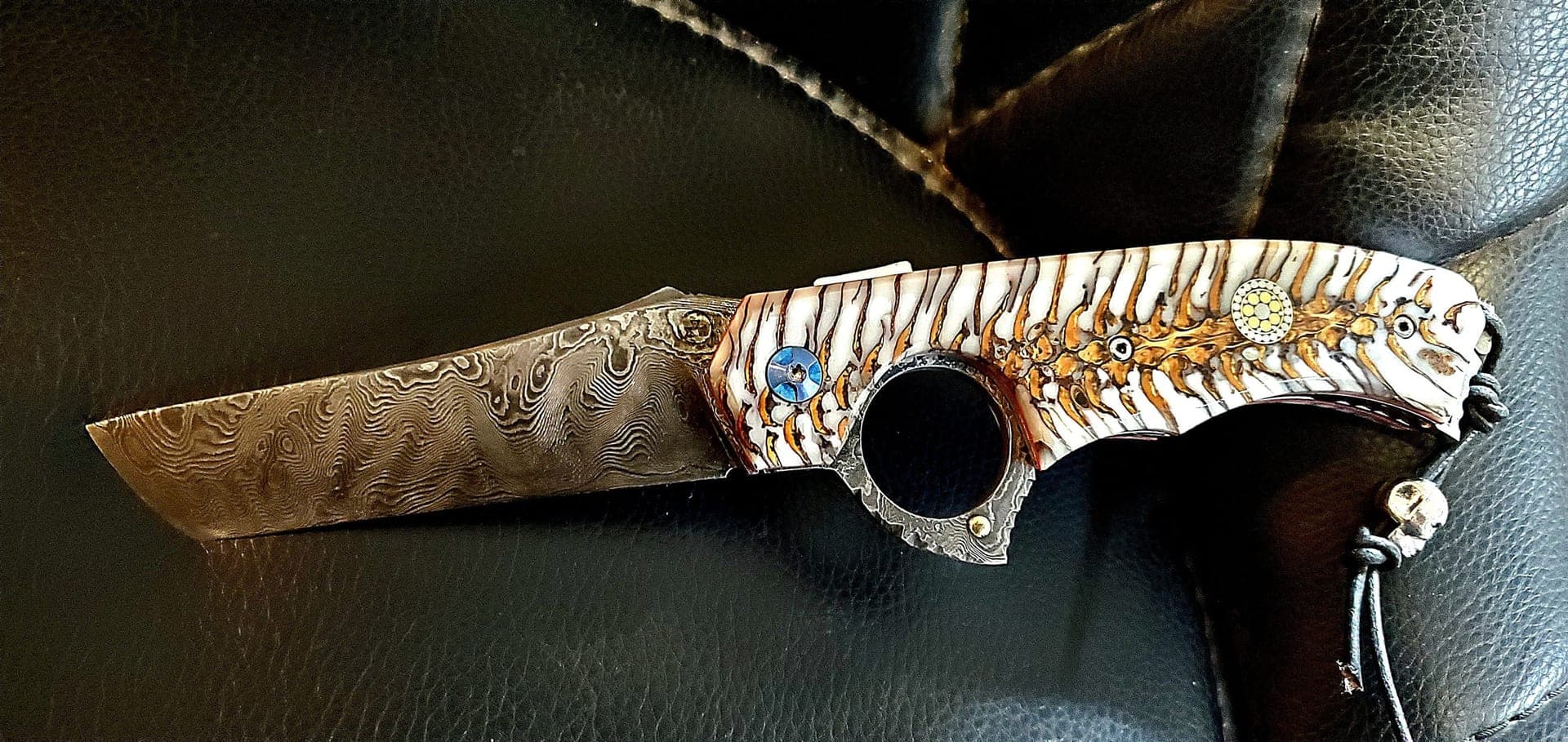
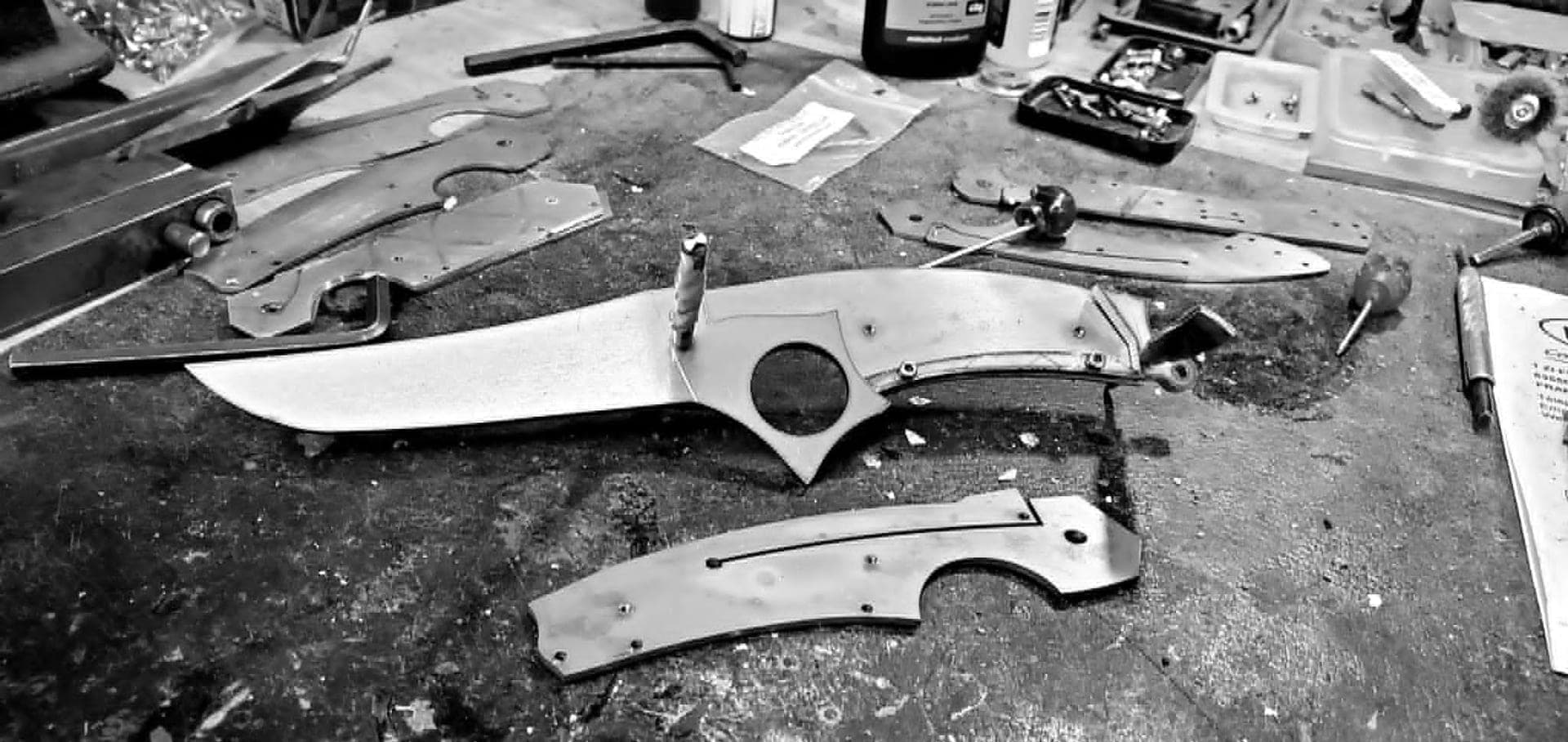
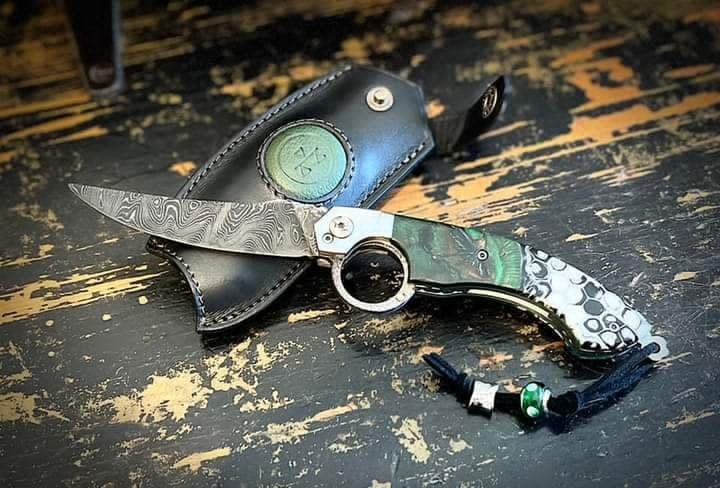
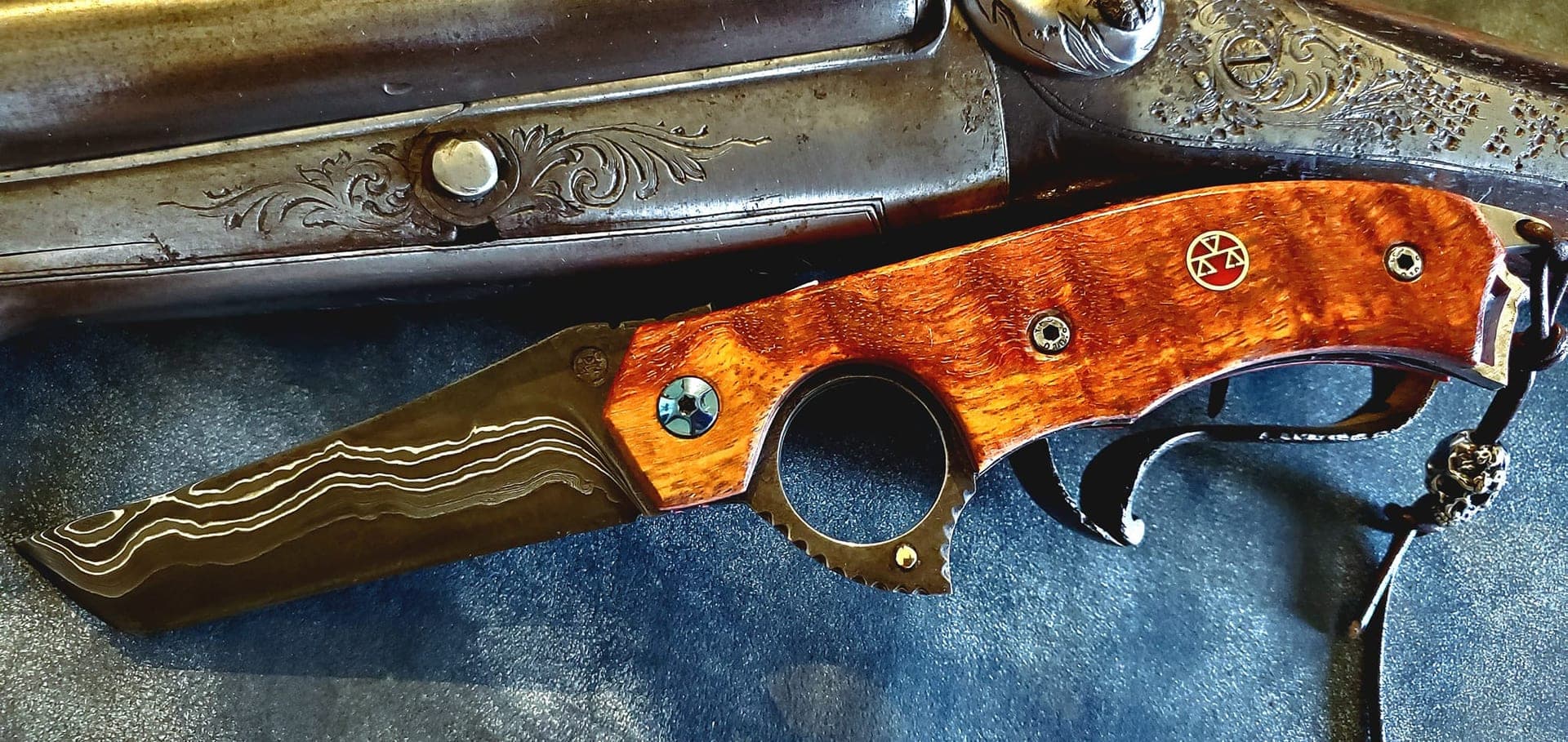
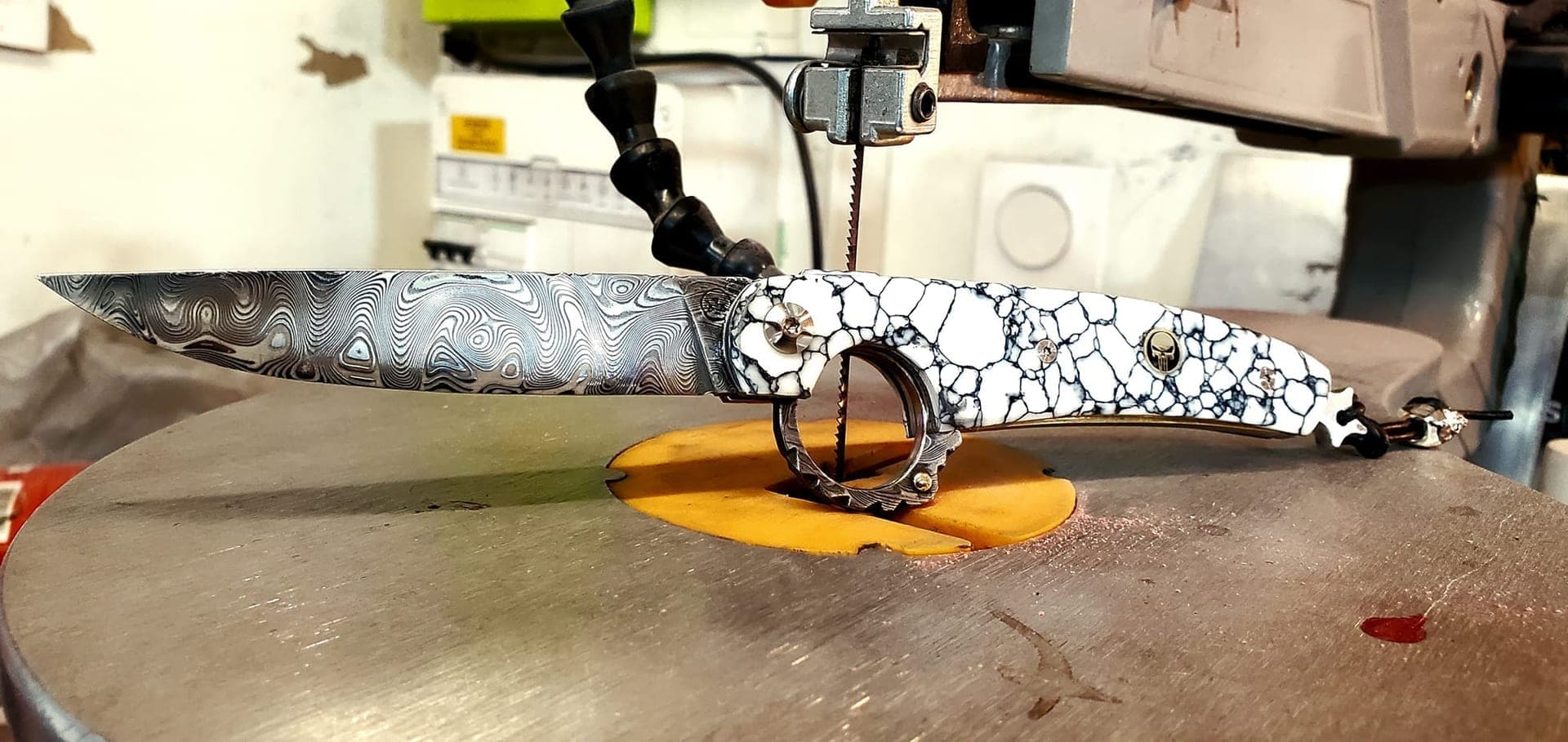
Every Résiliant knife is born in Thiers, in the continuity of this seven-century-old craft. It was here that the artisan invented the reverse-opening knife: an old lineage, a new gesture.
It is in this town, and in this history, that the work of Le Résiliant belongs. Forging in Thiers today does not mean repeating the past: it means inheriting a gesture and adding something to it. Here, the artisan imagined the reverse-opening knife, a mechanism that did not exist before him.
Each piece is shaped by hand, within the Thiers area, with the same demand that made the town's reputation. Le Fhiers, in fact, pays direct tribute to the cutlers who came before.
The rest of the story is written at the workbench, one blade after another. It continues that of all the Yellow Bellies who, before, made Thiers the capital of the knife.
- How long have knives been made in Thiers?
- Cutlery is documented in Thiers from the Middle Ages, in the 13th century. By the 15th century a quarter of the town's workers already lived from the trade, and the cutlery town took shape in the late 16th century.
- Why is Thiers the capital of cutlery?
- Thanks to the Durolle, a torrent whose water power turned wheels and tilt hammers for centuries, and to know-how passed down through generations. The town today makes nearly 80% of France's knives.
- What is the difference between a Thiers knife and a Laguiole?
- « Laguiole » is a knife shape, not a place of manufacture: a large share of Laguiole knives are made in Thiers. « Le Thiers » is the town's own knife, recognisable by its double-wave blade and the « T » stamp.
- How do you recognise a genuine Thiers knife?
- A knife with the « Le Thiers » label is made within the Thiers area, follows the registered double-wave design, and carries on the blade the name of its maker along with the « T » stamp controlled by the Confrérie.
- Are Le Résiliant knives Thiers knives?
- Yes: each piece is forged by hand in Thiers. The artisan carries on the local craft while having invented the reverse-opening knife, a mechanism unique to the workshop.
Sources
- Coutellerie de Thiers — Wikipédia — Synthèse encyclopédique : datation, force hydraulique, part de la production, label de 1994, lien avec Laguiole.
- Ville de Thiers — Capitale de la coutellerie — Source institutionnelle : origine médiévale, Vallée des Usines et des Rouets, près de 80 % des instruments coupants français.
- Confrérie Le Thiers® — Autorité du label : création en 1994, double vague, poinçon « T », rôle de la Confrérie.
- Musée de la Coutellerie de Thiers — Patrimoine muséal : les émouleurs, les Ventres jaunes, l'histoire médiévale de la cité.
- Le Courrier des Entreprises — Thiers, plus de la moitié de la filière — Chiffres récents : environ 760 emplois, 77 entreprises, poids national de la coutellerie thiernoise.